Home / Stories / War, Hard Times, and Rights
22,000 People, One Order in Council: The Uprooting and Internment of Japanese Canadians
In 1942 Canada removed about 22,000 Japanese Canadians from the British Columbia coast, sold their property without consent, and lifted the last restrictions only in 1949. This is how it happened, and how the community won redress.
The short answer
In February 1942, under Order in Council PC 1486, Canada removed about 22,000 Japanese Canadians from the British Columbia coast, most of them Canadian citizens, and sent them to road camps, interior camps, and sugar beet farms. Their property, promised protection, was sold without their consent in 1943. The last restrictions were lifted only in 1949.
On a spring day in 1942, a family in Steveston, at the mouth of the Fraser River, locked the door of a house they had built from fishing money and walked away from it carrying what they could hold. The fishing boats were already gone, taken months earlier. The father would be sent to a road camp in the Interior. The rest of the family would be sent to a converted livestock building in Vancouver to wait, and then to a hastily built camp in the mountains, or to a sugar beet farm on the Prairies, depending on what a file in an office said about them. They had committed no crime. No charge would ever be laid against them, or against anyone in their community, because there was nothing to charge. They were Canadians, most of them born in Canada, and their government had decided that who their grandparents were mattered more than anything they had ever done.
A community built on the coast
By 1941, about 23,000 people of Japanese origin lived in Canada, and the great majority of them lived in British Columbia, most along the coast. The community had deep roots by then. The first immigrants, the Issei, had arrived in the late nineteenth century, and their Canadian born children, the Nisei, were citizens starting families of their own. In Steveston, Japanese Canadian fishers made up a large share of the salmon fleet. In Vancouver, the Powell Street neighbourhood was a complete world of shops, churches, Buddhist temples, Japanese language schools, baseball teams, and newspapers. In the Fraser Valley, families farmed berries and vegetables on land they had cleared themselves.
This community existed in spite of the country around it, not because of it. British Columbia denied Japanese Canadians the vote, which in those years also shut them out of professions and public work tied to the voters list. Racist organisations campaigned against them for decades, and politicians in the province built careers on that campaigning. Yet the community built anyway, through the Depression, through discrimination written into law, through everything short of removal. What happened after December 1941 was not a break from that history so much as its worst chapter, made possible by everything that had come before it.
Panic, orders, and a legal signature
On December 7, 1941, Japan attacked the American naval base at Pearl Harbor, and Canada declared war on Japan within days. On the Pacific coast, fear curdled quickly into suspicion of everyone who looked like the enemy. Within days of the attack, the government seized about 1,200 Japanese Canadian fishing boats. A curfew followed. Newspapers and British Columbia politicians demanded removal, loudly and in print. Senior officers of the RCMP and the Canadian Army assessed the community and advised that it posed no security threat, and that mass removal was not necessary. The federal cabinet listened to the politics instead of the advice.
On February 24, 1942, cabinet passed Order in Council PC 1486 under the War Measures Act. It authorised the removal of all persons of the Japanese racial origin from a protected zone stretching about 160 kilometres inland from the Pacific coast. The wording reached everyone, citizens and non citizens, the elderly and infants, veterans of the Canadian Army and children in school. First, men aged 18 to 45 were taken to road camps. Then the order widened to whole families. In all, about 22,000 people were uprooted. Their first destination for many was Hastings Park in Vancouver, where families were housed in livestock barns on the exhibition grounds, sleeping in stalls that still smelled of animals, behind barbed wire, under guard.
Property taken, then sold
The uprooting came with a promise. The government appointed a custodian to protect the property people were forced to leave behind, and families understood that their homes, farms, boats, businesses, and belongings were being held in trust until they could return. The promise was broken in 1943, when policy changed and the custodian was authorised to sell Japanese Canadian property without the owners’ consent. Houses, farms, fishing boats, cars, furniture, businesses, and personal possessions were sold, often for far less than they were worth, and the proceeds were reduced by fees and charges before anything reached the owners. Some families received small cheques for everything they had owned, years after the sale, with an accounting they had never agreed to.
This is the part of the story that turns removal into dispossession. A family sent to a camp or a beet farm was poor, but a family whose home and boat and tools still existed could imagine coming back. The sales erased that future deliberately. When the war ended, there was almost nothing on the coast to return to, and everyone involved in making the policy understood that this was the point. Historians who have studied the property records, including the research project Landscapes of Injustice, have documented the sales file by file. The record is not a misunderstanding. It is a paper trail.
Road camps, ghost towns, and beet fields
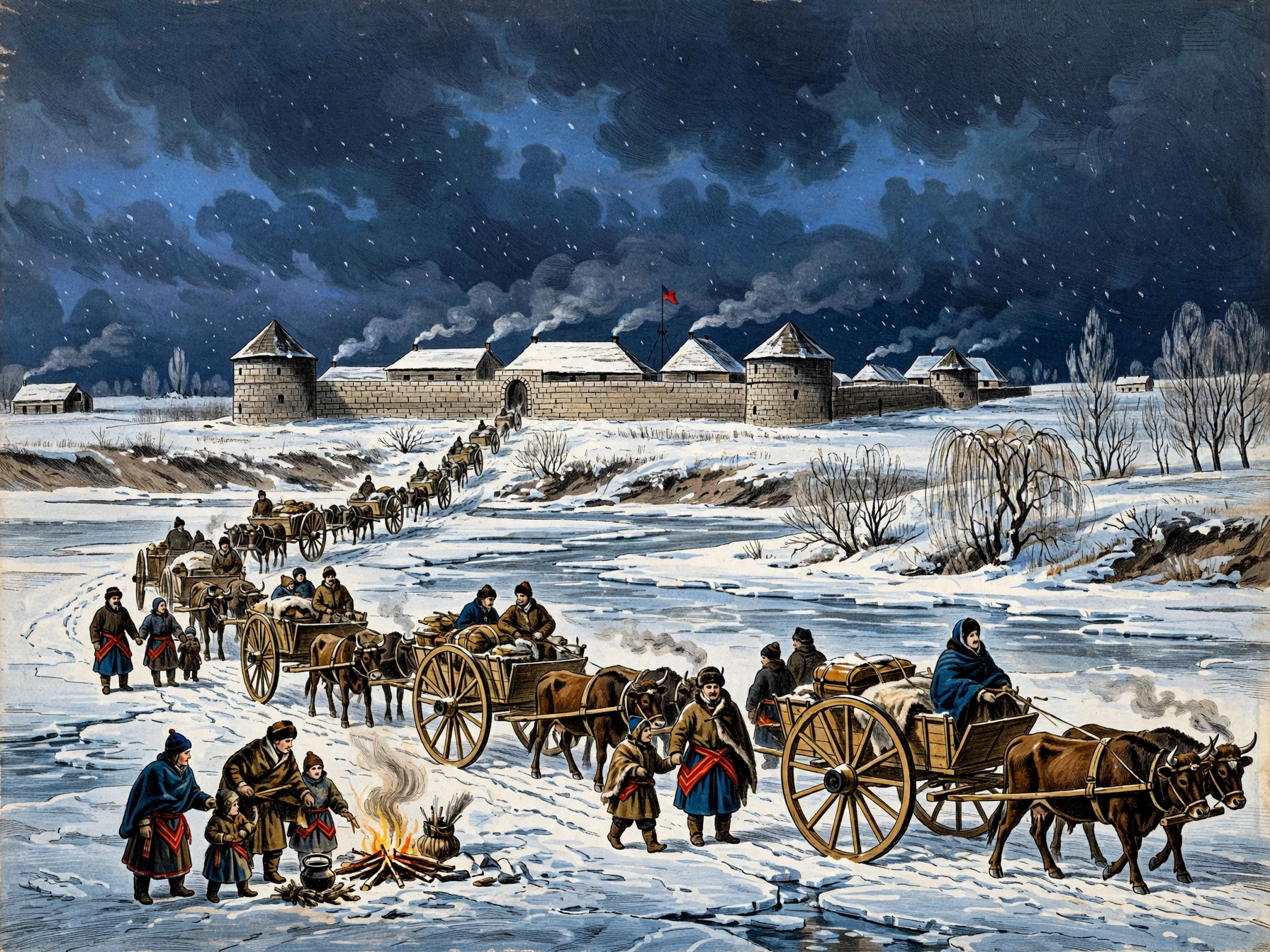
From Hastings Park, families were scattered across a geography chosen by officials. Men were sent to road camps in the Interior of British Columbia, separated from their families. Families who could pay were allowed to settle in self supporting projects, a phrase that meant starting again with their own money under supervision. Others were sent to housing sites in the Slocan Valley, at New Denver, Kaslo, Greenwood, and Tashme, some of them in buildings abandoned by mining towns, where winters were far colder than anything the coast had prepared them for. Thousands more were sent east to sugar beet farms in Alberta and Manitoba, where the work was heavy, the housing was often a converted shed or granary, and children worked in the fields beside their parents.
The camps and farms were not surrounded by the watchtowers of the European war, and this story should be told without borrowed images. What they were was coercive and cold and crowded, imposed on citizens by their own government, with movement controlled by permit and mail subject to censorship. Inside them, people did what people do. They built schools and gardens, formed baseball leagues, published camp newspapers, and taught their children the language the country had forbidden their schools to teach. That resilience belongs in the record, but it does not soften what was done to them, and they never claimed it did.
Exile, and freedom delayed
The war ended in 1945, but the uprooting did not. Ottawa presented Japanese Canadians with a forced choice: move east of the Rockies, or sign for deportation to Japan, a country many of them had never seen. Under pressure and despair, thousands signed, and some later fought to withdraw their signatures. In 1946, close to 4,000 people were shipped to Japan, a majority of them Canadian citizens by birth or naturalisation, many of them children. Deportation orders were challenged all the way to the courts and were finally dropped in 1947, but the ships had already sailed. The people exiled built new lives in a defeated and ruined country, or spent years working their way back to Canada.
For those who remained, restrictions lasted until 1949. Only on April 1 of that year were Japanese Canadians free to live on the British Columbia coast again, and only in 1949 did they receive the right to vote in federal elections, nearly half a century after the community began asking for it. Most did not return to the coast. There was nothing left to return to, and the community that had existed on Powell Street and in Steveston was dispersed across Canada for good. What survived was carried in families, in churches and cultural centres rebuilt in Toronto, Montreal, Winnipeg, and across the West, and in a determination that took shape over the following decades.
The legend vs. the record
The protective legend of this history is that internment was a security measure, harsh but necessary in wartime. The record refutes it at every point. The RCMP and the Army advised the government that Japanese Canadians were not a threat. Not one Japanese Canadian was ever charged with espionage or sabotage. German and Italian Canadians, whose ancestral countries were also enemy states, were never removed en masse as a people. The difference was race, and the politics of British Columbia, and those are the reasons the historical record supports.
A second legend holds that the property sales were a muddle, the result of wartime confusion. The record shows a deliberate policy change in 1943, carried out over the written protests of owners, and documented in government files that researchers have since read in full. A third, gentler legend says that the community quietly accepted what happened and moved on. The record shows the opposite. The redress campaign of the 1970s and 1980s, led by the National Association of Japanese Canadians and powered by the community’s own research into the sales, forced the issue into Parliament and kept it there until the government of Brian Mulroney signed a redress agreement on September 22, 1988. Its terms included a formal apology, payments of $21,000 to each surviving person who had been uprooted, and a community fund. The record, in the end, was assembled largely by the people the policy had tried to scatter.
Why it still matters
This history matters because it is the clearest Canadian case study of how quickly rights can be removed from citizens when fear and racism align, and how ordinary the machinery looks while it happens. No mob carried out the uprooting. Cabinet orders, custodians, auctioneers, and filing clerks did. The Canadian Charter of Rights and Freedoms now stands between any government and a policy like PC 1486, and this story is a large part of the reason Canadians understand why it must. Since 1988, the redress agreement has been cited whenever Canada has reckoned with other historical wrongs, because it established that a wrong documented is a wrong that can be acknowledged. On the coast, the boats are gone and Powell Street has changed, but the Nikkei National Museum, the camp sites in the Slocan, and the families themselves keep the record public. The point of remembering it is not complicated. It happened here, to Canadians, by law, and the people it happened to spent forty years proving it until their country agreed.
Common questions
How many Japanese Canadians were interned during the Second World War?
About 22,000 people were uprooted from the British Columbia coast under Order in Council PC 1486, passed on February 24, 1942. The community numbered about 23,000 across Canada in 1941. The order reached everyone of Japanese origin in the protected coastal zone, citizens and non citizens, the elderly and infants alike.
What happened to the property of interned Japanese Canadians?
The government appointed a custodian and families understood their homes, farms, boats, and businesses were being held in trust. In 1943 the policy changed, and the custodian was authorised to sell the property without the owners' consent, often for far less than it was worth, with fees deducted before owners received anything.
Did the Canadian government apologize for the internment of Japanese Canadians?
Yes. After a redress campaign led by the National Association of Japanese Canadians, the government of Brian Mulroney signed a redress agreement on September 22, 1988. Its terms included a formal apology, payments of $21,000 to each surviving person who had been uprooted, and a community fund.
Were Japanese Canadians a security threat during the war?
No. Senior officers of the RCMP and the Canadian Army assessed the community and advised the government that it posed no security threat and that mass removal was unnecessary. Not one Japanese Canadian was ever charged with espionage or sabotage, and German and Italian Canadians were never removed en masse as a people.
Sources
Every story on this site ends with the sources it was built from. Check us.
- Internment of Japanese Canadians — The Canadian Encyclopedia
- Japanese Canadians — The Canadian Encyclopedia
- Japanese Canadian Redress — The Canadian Encyclopedia
- Landscapes of Injustice — Landscapes of Injustice
- Nikkei National Museum — Nikkei National Museum and Cultural Centre
- Japanese Canadian Internment — Library and Archives Canada